
Rossby Energy
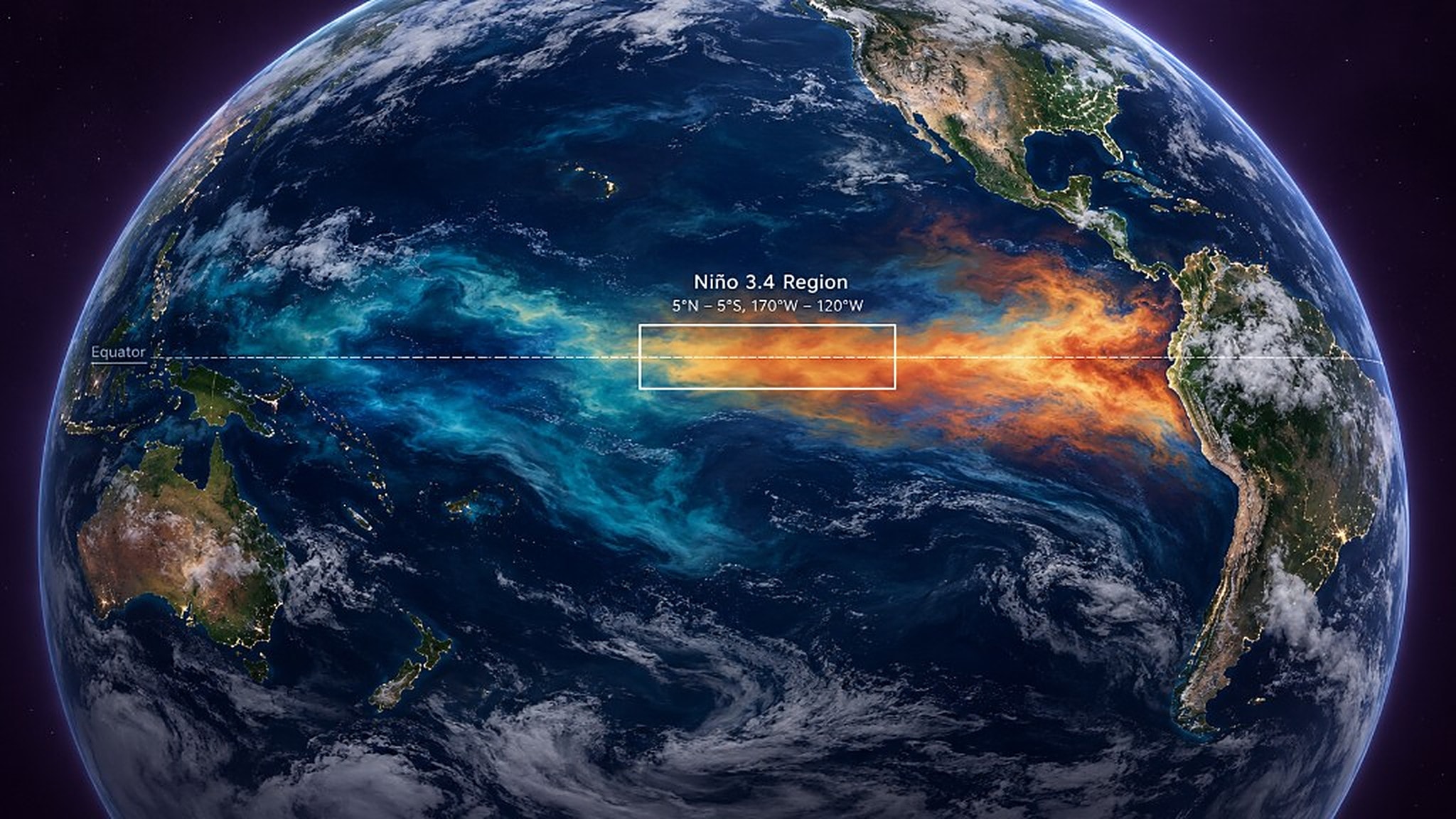
Satellite view of Pacific Ocean sea-surface temperatures along the equator
All projects

ENSO Advance Detection Platform

Calling El Niño events before they move the market

El Niño reshapes a North American winter, and with it heating demand and the price of gas, so waiting for official confirmation is expensive. We read the Pacific the year before and give one answer rather than a hedge.

Built on public ocean and atmosphere records

Winters tested
34

1992/93 through 2025/26

El Niños caught
9 of 9

None were missed

Quiet winters called right
17 of 25

The other 8 were early calls

Where we look
Niño 3.4

Central equatorial Pacific

How a forecast is made

From last year’s ocean to one call for this winter

Read how unsettled the Pacific was last year

One stretch of the equatorial Pacific drives the whole cycle, so that is the only place we measure. A full year of daily temperature from it, read from more than one global dataset, is reduced to a single number: how unsettled the ocean was.

  1. 22measuring points

    One stretch of the equatorial Pacific, 5°S–5°N, 170°W–120°W. The same points every year, so no reading is ever taken from a different place than the last.

  2. 365days at each point

    A full year of daily temperature, not a snapshot and not a monthly average. How the ocean moved through the year is the whole point.

  3. 2independent records

    The same year read separately from two global datasets, so no single data source can carry the reading on its own.

All of it becomes one number

2.07

how unsettled the ocean was last year

Every year measured, 1984 to 2025
20252.07calmer than 34 of the other 41 yearsabove the typical 1.47
'85'90'95'00'05'10'15'20'25
Last year (2025)Earlier yearsTypical year (1.47)Hover, tap or use the arrow keys to read any year.

An unsettled year means the temperature kept shifting in irregular ways instead of following its usual seasonal rhythm. Last year read 2.07, above the typical 1.47 and calmer than only 7 of the 41 years before it. The calmest year on record read 0.38 and the most unsettled 3.36. That single number is the input to everything that follows.

Data noteThe 2.07 reading, and the range it is placed in, are values the platform published in its own annual reports. A third global record is normally read alongside these two; it published no value for last year, so this reading is built from two rather than three.
Test the method on every winter since 1992

Each winter in the record is forecast using only the El Niño events that came before it, then scored against NOAA's official history. That keeps the test honest: no winter is ever graded with the benefit of knowing what came later.

Winter

Nov 2025 – Mar 2026

Our call

No El Niño

-0.20 °C

Ocean before

−0.42 °C

that December

Outcome

We called a quiet winter, and it stayed quiet.

Each winter · call against the ocean it started from

−2.50−1.50−0.50+0.50+1.50+2.50+3.50-0.8-0.3+0.3+0.8+1.3+1.8+2.3+2.8El Niño declared at 0.5 °COcean the December before, °CStrength we published, °C
El Niño called correctlyQuiet winter called correctlyCalled early, no event followedEl Niño declared at 0.5 °C

Each point is one winter. Height is the strength we published; left and right is how warm the ocean already was that December. A point above the dashed line is not an El Niño call on its own — the December before also had to sit below 0.5 °C, or the ocean was already in an event rather than starting a new one. 15 of the 17 El Niño calls were made while the ocean was still cool — including 7 that then arrived — so the method is not only repeating a warm ocean it can already see. Hover a point or a year. No El Niño in this window was missed.

Why the early calls cost little

An early call means we expected an El Niño and the winter stayed ordinary. That matters far less than it sounds, because 7 of the 8 landed in a neutral winter — neither El Niño nor its opposite. You were positioned for a stronger signal than arrived, not positioned the wrong way round.

Each bar is the peak that winter actually reached. 7 of 8 stayed between the two thresholds. Only 1 crossed the other way (Nov 2008 – March 2009), and it crossed by a small margin.

Nov 2008 – March 2009-0.55 °CCrossed into La Niña— 0.05 °C past the La Niña line
93/9496/9700/0101/0208/0912/1313/1422/23
Landed in the neutral bandCrossed into the opposite patternEl Niño threshold (+0.5 °C)La Niña threshold (-0.5 °C)Hover, tap or use the arrow keys to read any winter.

Data noteExact results from the report's onset table, scored against NOAA's official El Niño record. Each winter is predicted using only the events that came before it.

State the call for the coming winter

The output is one answer and one number, not a range of scenarios. Setting it against every El Niño on record shows whether we are calling an ordinary event or an exceptional one.

Coming winter

Nov 2026 – March 2027

Our call

El Niño expected

Starting from

−0.54 °C

December 2025

Expected strength

1.42 °C

a swing of +1.96

Where 1.42 °C sits among recorded El Niños

1.420.5 declared3.0 °C

Our forecast, not yet observed

Rank if it lands

7 of 12

6 recorded events were stronger, 5 were weaker

Closest recorded event

2002/03

Peaked Nov 2002 at 1.31 °C

Swing from last December

−0.54 → 1.42

+1.96 °C from December 2025

Recorded by NOAAOur forecastMiddle recorded peak (1.56 °C)El Niño declared at 0.5 °C

Every mark is a peak in degrees above normal. The 11 cyan marks are El Niños NOAA has recorded since 1986; the violet mark is our forecast. It would sit between 2009/10 (1.56) and 2002/03 (1.31), nearest to 2002/03 at 1.31 °C — a mid-range event, not an extreme one. Run on 18 August 2026 from ocean data up to 31 July 2026.

Data noteThe 1.42 °C figure and every past peak are exact values from the report. Past peaks are what NOAA recorded; the 2026 figure is a forecast.

How it works

Last year’s ocean tells you about this winter

Most forecasts look for El Niño once it has already begun to surface, which is late for anyone who has to take a position on a winter. This platform reads something different: in the year before an event, the ocean behaves in a way that can be measured. That puts the signal in your hands around six months before standard models turn confident.

  1. 01

    Watch one stretch of ocean

    The cycle is driven by a specific band of the equatorial Pacific, so that band is the only place we measure. 22 fixed points, the same ones every year.

  2. 02

    Measure a whole year, not a moment

    Rather than waiting for warm water to show up, we measure how unsettled that patch of ocean was across an entire year — and we do it on more than one independent record so no single dataset can carry the call.

  3. 03

    Compare against past events

    Every El Niño in the record is paired with how unsettled the ocean was the year before it. That relationship is what turns this year's reading into a call for next winter.

  4. 04

    Give one answer

    A winter is called an El Niño when the reading clears the official threshold and the ocean was not already warm the December before, which would make it a continuation rather than a new event. Otherwise the answer is no.

What you get

AOne call for the coming winter
El Niño or no El Niño. A single answer you can act on, not a spread of scenarios to interpret.
BThe record that stands behind it
Every scored winter, all 34 of them, with what we called and what happened. You can see how often the call has been right before you rely on it.
CA report, not a feed to watch
Delivered on demand and regenerated when new ocean data lands, so it arrives when you need it rather than needing to be monitored.

Across the 34 winters tested, every El Niño was called ahead of time and none was missed.

Line drawing of downtown Vancouver from above False Creek: Stanley Park, the Lions Gate Bridge, the towers, Canada Place and BC Place, with the North Shore mountains behind

Our office

Based in Vancouver,
Canada

The office is here. The work is not limited to Vancouver.
We work with energy and commodity trading firms in other markets.
Email, call, or ask for a consultation.